Rachel Brown: The Inspiring Journey of an England Football Legend
From teenage goalkeeper to international star, respected pundit and influential voice in women's football

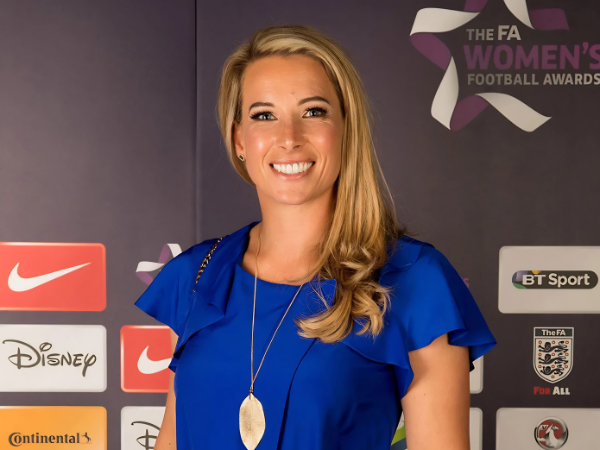
Rachel Brown, now widely known as Rachel Brown-Finnis, is a former England international goalkeeper, football pundit and speaker who built an impressive career across more than two decades. Born in Burnley in 1980, she won 82 England caps, represented Great Britain at the 2012 London Olympics and lifted the FA Women’s Cup with Everton in 2010. After retiring from playing, she successfully moved into broadcasting and remains a respected voice in women’s football.
Introduction
Rachel Brown’s story is about far more than football. Her career reflects the remarkable development of women’s football in England, from an era when the women’s game had limited professional opportunities to the highly visible sport it is today.
She started playing at a remarkably young age, reached an FA Women’s Cup final as a teenager and eventually became one of England’s most experienced goalkeepers. Today, her expertise continues to influence football through broadcasting, analysis and public speaking.
Who Is Rachel Brown?
Rachel Brown-Finnis is a former English professional football goalkeeper who represented England from 1997 to 2013. She played for clubs including Liverpool and Everton and also spent time playing college football in the United States.
Her international career included two FIFA Women’s World Cups, major European Championship tournaments and the 2012 London Olympics with Great Britain. She finished her England career with 82 appearances, a significant achievement for a goalkeeper of her generation.
Following retirement, Brown-Finnis established herself as a football broadcaster and pundit. Her experience as an international goalkeeper gives her a particularly useful perspective when analysing goalkeeping, tactics and major women’s football matches.
Rachel Brown Age
Rachel Brown-Finnis was born on 2 July 1980, making her 46 years old in 2026. She was born in Burnley, Lancashire, although much of her early life and football development was associated with the Accrington and wider Lancashire area.
Her age is particularly interesting when viewed alongside her career. Brown-Finnis entered senior football as a teenager and remained involved at the highest level for many years, eventually retiring in January 2015 at the age of 34.
Early Life and Background
Brown-Finnis developed an interest in football while she was still at primary school. Initially, she played in a boys’ team and eventually moved into organised women’s football with Accrington Ladies.
Her natural position was goalkeeper. That decision would shape the rest of her career, although it was not necessarily the path she had originally imagined. The FA’s account of her career highlights how quickly she progressed from local football to the national stage.
At only 15, Brown joined Liverpool Ladies. Her early breakthrough was extraordinary because she soon found herself playing against some of the strongest women’s teams in England.
She appeared in the 1996 FA Women’s Cup Final with Liverpool while still a teenager. Although Liverpool eventually lost the final on penalties, the experience provided an early indication of the level she could reach.
Education
Education remained an important part of Brown-Finnis’s development alongside football.
After her early years with Liverpool, she moved to the United States and played college football. She attended the University of Alabama before transferring to the University of Pittsburgh, where she continued developing as a goalkeeper.
Her American experience was valuable both athletically and personally. She competed in a different football environment while continuing her education and later completed a degree in Sports Science.
After returning to England, she also qualified as a PE teacher at Liverpool John Moores University, according to her published career biography.
Career Journey
Liverpool and Early Success
Brown began her senior club career with Liverpool in the mid-1990s. Her first-team opportunity arrived unusually early, and she quickly gained valuable experience in competitive women’s football.
Her performances helped establish her reputation as a promising young goalkeeper, eventually leading to her England debut.
England International Career
Brown made her England debut against Germany on 27 February 1997, when she was only 16. She went on to earn 82 caps over an international career that lasted until 2013.
She featured at two World Cups and two European Championship finals, including England’s run to the UEFA Women’s Euro 2009 final. She was also selected for Great Britain’s football squad at the London 2012 Olympics.
Her longevity was especially impressive because women’s international football was changing rapidly during her career.
Everton Years
After returning from the United States, Brown joined Everton in 2003. She became an important figure at the club and remained there for more than a decade, apart from periods involving loans and injury.
Her biggest club achievement arrived in 2010 when Everton defeated Arsenal in the FA Women’s Cup final. The victory was particularly meaningful because Brown had previously experienced the disappointment of losing a final with Liverpool as a teenager.
Major Achievements
Rachel Brown-Finnis’s most notable achievements include:
- 82 England international caps
- Representing Great Britain at the 2012 London Olympics
- Appearing at two FIFA Women’s World Cups
- Reaching the UEFA Women’s Euro 2009 final
- Winning the 2010 FA Women’s Cup with Everton
- Reaching an FA Women’s Cup final at only 15
- Being inducted into the National Football Museum Hall of Fame in 2016
The Hall of Fame recognition underlines her importance to English women’s football and acknowledges a career that helped bridge different generations of the sport.
Why Is Rachel Brown Popular?
Rachel Brown remains popular because she represents an important chapter in the history of women’s football.
She played during a period when female footballers had considerably fewer professional opportunities than they do today. Her career therefore provides a useful perspective on how the women’s game developed.
Her move into broadcasting has also strengthened her public profile. Rather than disappearing from football after retirement, she used her playing experience to build a second career as an analyst and commentator.
In 2025, BBC Sport featured Brown-Finnis extensively around the Women’s European Championship, identifying her as a football expert and using her predictions and analysis throughout the tournament.
Rachel Brown Family
Rachel Brown-Finnis keeps much of her family life away from the public spotlight. She married Ian Finnis, a professional golf caddie, in 2013.
Although her professional life is well documented, she generally focuses public attention on football, broadcasting and women’s sport rather than sharing extensive personal information.
This approach has allowed her to maintain a relatively private family life while continuing to have a strong public career.
Rachel Brown Net Worth
There is no reliably verified public figure for Rachel Brown-Finnis’s net worth. Online estimates should therefore be treated cautiously rather than presented as established fact.
Her income over the years has come from several professional areas, including elite football, broadcasting, punditry, commentary and speaking engagements. However, neither her personal assets nor complete earnings have been publicly documented in a way that supports a precise net-worth figure.
For that reason, it is more accurate to say that Rachel Brown-Finnis has built a successful professional career without assigning an unsupported monetary value to her wealth.
Rachel Brown Wikipedia
A Wikipedia page exists under the name Rachel Brown-Finnis. It identifies her as an English former football goalkeeper and records her career with Liverpool, Everton, the United States college teams and England. It also records her 82 international caps and Great Britain appearance at the 2012 Olympics.
However, official sources such as the Football Association and England Football are stronger references when verifying career statistics and major achievements. England Football’s historical records identify her as Rachel Brown (Brown-Finnis) in England line-ups.
Interesting Facts About Rachel Brown
She reached an FA Cup final at 15
One of the most remarkable details of her early career is that Brown played in the FA Women’s Cup Final when she was only 15. The FA later described her as having helped make women’s football bigger through her long career.
She played in the United States
Her decision to play college football in America gave her a very different sporting experience and helped develop her football career while she continued her education.
She competed at the Olympics
Brown-Finnis was part of the Great Britain squad for the London 2012 Olympics, giving her career an additional international dimension beyond England football.
She successfully changed careers
Rather than ending her involvement in football after retirement, Brown-Finnis became a respected broadcaster. Her analysis benefits from first-hand knowledge of international goalkeeping and elite competition.
Future Plans or Current Work
Rachel Brown-Finnis continues to work in football broadcasting and analysis. Her BBC Sport appearances during Euro 2025 demonstrated that she remains an active and trusted football expert more than a decade after ending her playing career.
Her continued presence in major football coverage also reflects the growing demand for experienced former players who can explain the modern game to a wider audience.
As women’s football continues to expand, Brown-Finnis is well placed to contribute to discussions about performance, tactics, player development and the continuing professionalisation of the sport.
Conclusion
Rachel Brown-Finnis has built a career that stretches far beyond her achievements as an England goalkeeper. From playing an FA Women’s Cup final at 15 to winning the competition with Everton, earning 82 England caps and representing Great Britain at the Olympics, her playing career was filled with significant milestones.
Her transition into broadcasting has added another important chapter. Today, Rachel Brown is recognised not only for what she achieved between the posts but also for the knowledge and experience she brings to football analysis.
Her story ultimately reflects the growth of women’s football itself. She played during its earlier stages, helped raise its profile through international competition and now continues to contribute as a respected pundit and football voice.